Audition (1999)
by nionios
(Ôdishon - オーディション) An uncomfortable slow-burn descent into Japanese flavored madness
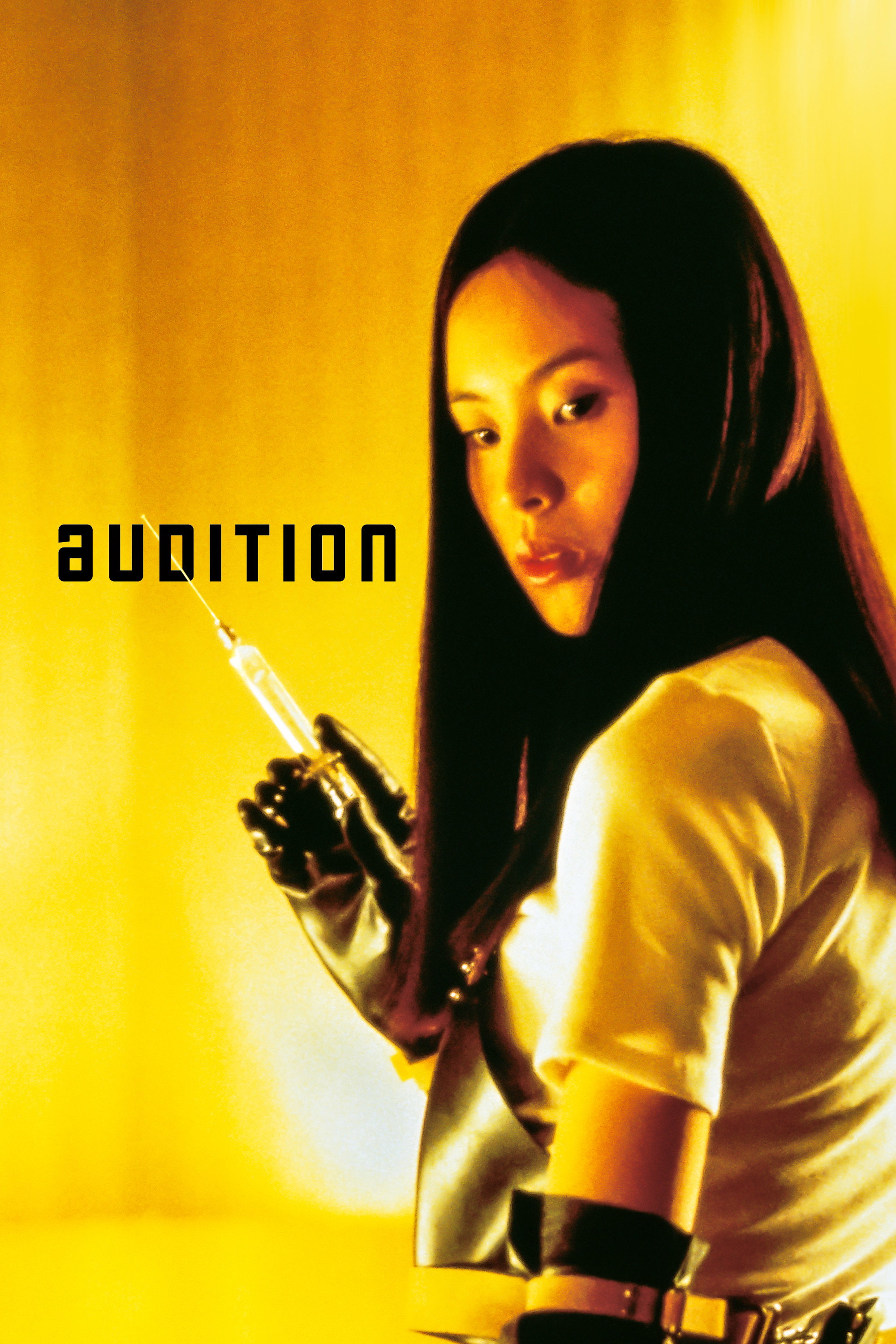
This film's aesthetics are top notch. I love everything from the minimalist scenery, the duality of he warm/cold colors used during hazy dream-like sequences, as well as the striking, paper-overflowing Japanese office 90s buildings.
Our main character is a law-abiding, conventional business executive that loses his wife due to illness. Several years later, urged by the passage of time, loneliness and his own son, he begins looking for his next marriage. However, it seems that he generalizes "modern" women as sub-par. Due to this, with the help of another business exec friend, he comes up with an intriguing, yet equally perplexing and worrying solution: They will hold a fake audition of a made-up movie. interviewing women under the guise of a lead role in the non-existent film. Among these women's CVs, our main character will pick and choose his ideal wife.
Of course, the woman he picks is the mysterious Asami, whose life up until this point is self-explained by dubious references and uncertain generalities. Rest assured, this is no ordinary girl. Our lead falls madly in love with her, to the point of obsession, much to the dismay of his partner-in-shady-interviews friend. Also rest-assured, he got what was coming to him and much more.
There was plenty of discourse over this film online and when it came out in general, since themes of women objectification, especially in Japanese society are obviously explored here. Our male main characters all seem to view women as either trophies, as an extension of their long résumés, in which every entry needs to be as excellent as the last one. They choose their partners with a strict list of requirements, not unlike an audition anyways, so why not hold a formal audition while we are at it?
A lot of people seemed to think the film leans into these problematic views a bit too much, not scrutinizing them enough. I am of the opposite opinion however, I believe that while the humor of this film might confuse part of the audience as an endorsement of toxic behaviors, Asian cinema tends to lean more into subtle messaging than outright having characters explain the moral takeaway of the movie - looking at you "Barbie" (2023) lol. In my view the director is even being less subtle than usual for asian cinema, since Asami is pretty straightforward with her opinions at some point.
No need for a moment when see faces the screen and says: "You know, women in Japanese society are extremely oppressed by impossible and inhumane standards, which they learn to always tolerate silently and submissively!!" - you are expected to come up with this on your own you know! Anyway, I liked both the messaging, the delivery of it and the film as a whole.